Bible, Actually
The Secret Rapture Is a Modern Invention — and Historians of All Traditions Agree
Few eschatological concepts have embedded themselves so deeply in popular Christian imagination as the secret rapture. The scenario is familiar: believers disappear from the earth in an instant before a period of tribulation, after which Christ returns visibly to all. It has generated a series of best-selling novels, multiple films, and innumerable sermon illustrations. For many evangelical Christians, it registers as the historic teaching of the church.
The historical record is more complicated — and the complication is worth knowing regardless of where one lands on the underlying theological question.
The Text and the Framework
The New Testament passage on which the scenario rests is 1 Thessalonians 4:17: “Then we who are alive, who are left, will be caught up together with them in the clouds to meet the Lord in the air, and so we will always be with the Lord” (ESV). The Greek word behind “caught up” is ἁρπαγησόμεθα (harpagēsometha) — rendered in the Vulgate as rapiemur (“we shall be caught up”), the root from which “rapture” derives. This verse has been read by Christians since the apostolic period, cited in early commentaries, and treated as a key text for eschatological hope across the full range of church tradition.
What was not read by Christians until the nineteenth century is the specific interpretive framework surrounding it: that this event is a covert, believers-only occurrence, separated from and preceding the visible Second Coming by a seven-year tribulation period, happening in such a way that unbelievers are unaware of what has occurred. That particular construct is modern, not ancient.
John Nelson Darby and the Plymouth Brethren
The construct was formulated by John Nelson Darby (1800–1882), an Irish-born Anglican clergyman who became the leading theologian of the Plymouth Brethren, a reform movement that emerged in Britain and Ireland in the late 1820s. Donald H. Akenson’s study Exporting the Rapture traces in careful detail how Darby developed a theological system called dispensationalism, which divides redemptive history into discrete epochs in which God deals with humanity differently. Within this framework, the church age would end with a covert rapture of believers, followed by a period in which God resumed dealing with ethnic Israel directly, culminating in the visible return of Christ.
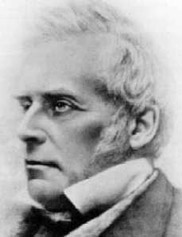 John Nelson Darby (1800–1882) · Public Domain. The Plymouth Brethren theologian who first systematized the pre-tribulation secret rapture scenario in the 1830s. Nineteenth-century portrait.
Darby was a tireless propagandist for his system and made multiple extended visits to North America. Akenson documents how the Victorian-era transatlantic infrastructure — periodicals, Bible conferences, networks of itinerant preachers — carried Darby’s ideas rapidly into American evangelicalism, where they found fertile ground in the post–Civil War period of heightened millennial expectation.
The Scofield Reference Bible
The instrument of broadest popular dissemination was the Scofield Reference Bible, first published by Oxford University Press in 1909. C. I. Scofield placed dispensationalist commentary directly on the page alongside the biblical text, in the form of footnotes that appeared immediately below the canonical passage. For millions of readers, the notes carried the gravitational pull of the text itself. The 1917 revised edition expanded the apparatus further. Timothy P. Weber, in On the Road to Armageddon, traces how this annotated Bible shaped a generation of fundamentalist and evangelical readers, and how dispensationalist expectations about Israel subsequently fed into twentieth-century American political attitudes still visible today.
What Historians Agree On — and Where They Disagree
A useful feature of this historical debate is that participants across the theological spectrum agree on the core historical fact: the specific pre-tribulation secret rapture scenario does not appear in any identifiable form before the 1830s. Stanley N. Gundry’s edited volume Three Views on the Rapture presents the pre-tribulation, prewrath, and post-tribulation positions in structured dialogue, with representatives from each view offering arguments and responding to the others. None of the contributors from any position claims that the pre-tribulation secret rapture was a recognizable teaching of the church fathers, medieval theologians, Luther, Calvin, or any major Reformer.
Some researchers have proposed earlier precedents. Morgan Edwards, an eighteenth-century Baptist minister, is occasionally cited for remarks in a 1788 essay that superficially resemble later rapture language. Francisco Ribera, a sixteenth-century Jesuit commentator, appears in some popular accounts. Scholars who have examined these claims closely — including those sympathetic to the pre-tribulation position — have generally concluded that neither constitutes an articulated predecessor to Darby’s system, and there is no demonstrated line of influence running from either figure to Darby’s formulation.
The ongoing debate within eschatology concerns the theological question — whether the pre-tribulation reading is exegetically defensible, which traditions within the church it fits or conflicts with, and which scenario best accounts for the full range of New Testament eschatological texts. That debate is live, serious, and conducted across confessional lines. It is a different question from the historical one.
What This Means for the Conversation
Knowing the historical origin of the concept does not automatically resolve the theological debate. A doctrine can be newly formulated and still be scripturally defensible — the church’s understanding of Scripture has always developed over time, and formulations are often clarifications of what was implicit rather than inventions of what was absent. That case can be made for the pre-tribulation view, and its proponents make it.
What the history establishes is that the pre-tribulation secret rapture is a proposal of nineteenth-century origin, not a recovery of ancient consensus. The difference matters because the antiquity of a teaching has often been part of how this particular concept is presented to lay audiences — the impression, sometimes explicit, that this is what the church has always believed.
The earliest church’s eschatological vocabulary was simpler than the dispensationalist architecture. Maranatha — “Come, Lord” (1 Corinthians 16:22) — was a prayer, not a scenario. Whether that simplicity contains more or less than the elaborated system is a question worth sitting with, whatever one’s eschatological conclusions.
References
- Donald H. Akenson, Exporting the Rapture: John Nelson Darby and the Victorian Conquest of North-American Evangelicalism (Oxford University Press, 2018)
- Stanley N. Gundry, ed., Three Views on the Rapture: Pretribulation, Prewrath, or Posttribulation (Counterpoints: Bible and Theology; Zondervan, 2010)
- Timothy P. Weber, On the Road to Armageddon: How Evangelicals Became Israel’s Best Friend (Baker Academic, 2004)
Comments
Leave a comment
Comments are reviewed before being published. Only your name and comment are stored — no personal data collected.
You might also like
Bible, Actually
The Millennium Was Already Debated in the Early Church
Justin and Irenaeus expected an earthly millennium. Augustine helped establish another reading, but neither position began with unanimous agreement.
Bible, Actually
'Scripture Alone' Never Meant Throw Out Everything Else
Luther and Calvin treated Scripture as final authority while honoring creeds and teachers. What distinguishes sola scriptura from solo scriptura?
Bible, Actually
Chalcedon, AD 451: The Definition That Settled Christ's Two Natures — and Split the Church
In 451, the Council of Chalcedon settled how Christ's full divinity and full humanity relate in one person. The answer became the doctrinal standard — and also the starting point of a schism that is still not fully healed.
Loading comments…