Bible, Actually
Garden Tomb or Church of the Holy Sepulchre: What the Archaeology Actually Says
Every year, hundreds of thousands of Protestant pilgrims visit the Garden Tomb in Jerusalem — a rock-cut cave set in a quiet garden outside the Damascus Gate. Many weep there. Many pray there with genuine faith. And many leave believing they have stood at the place where Jesus was buried and rose from the dead. The problem is that archaeologists have a detailed, specific, and well-supported reason to conclude that this particular tomb has nothing to do with first-century Jerusalem.
How the Garden Tomb Entered Protestant Consciousness
The claim began in 1883. Charles George Gordon (1833–1885), the British general famous for his campaigns in Africa and China, was visiting Jerusalem when he noticed that a rocky escarpment north of the Damascus Gate seemed to resemble a skull — and therefore, he concluded, it must be Golgotha (the place of the skull, John 19:17). Near that outcropping was a rock-cut tomb and a garden, and Gordon identified them with “a new tomb in which no one had yet been laid” (John 19:41). Within decades, the site had become a fixture of Protestant pilgrimage — tranquil, outdoor, and free of the architectural layers and competing Christian communities that crowd the Church of the Holy Sepulchre.
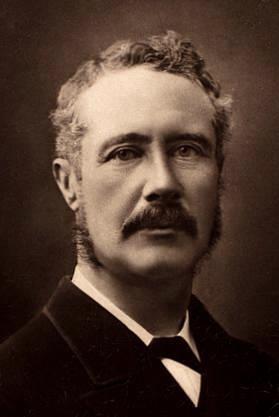 Photographed by Freres · Major-General Charles George Gordon, c. 1880s · Public Domain. Gordon proposed the Garden Tomb as the site of Jesus’s burial in 1883, based on a reading of the landscape rather than on archaeological investigation.
Gordon’s proposal rested on his reading of the landscape and the biblical text. It was not based on archaeological excavation.
What the Archaeology Shows
In 1986, Israeli archaeologist Gabriel Barkay published a detailed study of the Garden Tomb in the Biblical Archaeology Review. His conclusion was unambiguous: the tomb’s interior structure — the arrangement of benches on three sides and the configuration of the entrance — is characteristic not of first-century Jewish burial practice but of the Iron Age II period, meaning the eighth to seventh century BCE. The tomb predates Jesus by approximately seven to nine centuries.
John 19:41 specifies that the tomb was new, one in which “no one had yet been laid.” A tomb from the eighth century BCE that had presumably been in use for generations cannot be meaningfully described as new in the first century CE. The archaeological identification removes the Garden Tomb from serious contention on its own terms.
Jerome Murphy-O’Connor, the New Testament scholar and longtime resident of the École Biblique in Jerusalem, whose Oxford Archaeological Guide to the Holy Land is a standard reference for the region, was categorical: the Garden Tomb has “no claim whatsoever to be the place where Christ was buried.” Dan Bahat, formerly Jerusalem’s city archaeologist, wrote in the same volume of BAR that the Church of the Holy Sepulchre is the site for which “there is no other place which has a stronger claim.”
The Case for the Church of the Holy Sepulchre
The Church of the Holy Sepulchre — the ancient, chaotic, multiply-contested basilica inside Jerusalem’s Old City — has a better-documented history and stronger archaeological support than is often appreciated by Protestant visitors, who sometimes find its atmosphere overwhelming and its theological claims hard to evaluate.
The evidentiary chain begins not with Christian testimony but with Roman policy. In 135 CE, the emperor Hadrian rebuilt Jerusalem as a Roman colonial city (Aelia Capitolina) and constructed a temple to Venus on the site now occupied by the Church of the Holy Sepulchre. That a pagan temple was placed precisely here — over a location that the Christian community had evidently been preserving in memory — is, as Bahat observes, the kind of evidence that cuts both ways: enemies tend to build over places that matter.
 David Roberts (artist) and Louis Haghe (lithographer) · Church of the Holy Sepulchre, Jerusalem, c. 1843 · Public Domain. A 19th-century artistic depiction; details of the building’s exterior have changed since this lithograph was made.
In 325 CE, the empress Helena — mother of Constantine — had the Venus temple demolished and excavated. Eusebius of Caesarea records the process and the discovery of the tomb beneath it. The church Constantine subsequently built on the site established a line of continuous use and testimony that has not been interrupted since. More importantly, Bahat’s archaeological work in and around the site confirmed that the area contained first-century quarrying and tomb remains — and that it lay outside Jerusalem’s first-century city wall, which is exactly the topographical requirement for Golgotha and the nearby tomb (John 19:41 notes it was “in the place where he was crucified”).
Honest Limits
The consensus among biblical archaeologists strongly favors the Church of the Holy Sepulchre over the Garden Tomb. But Bahat himself is candid about what that consensus cannot claim: final archaeological certainty that any specific site is the exact location of the crucifixion and burial is, given the nature of the evidence and the passage of two millennia, probably unattainable.
It is also worth knowing that the Garden Tomb Association, which manages the site today, no longer officially claims that it is the site of the resurrection. The organization presents the location as a place for Christian reflection and worship, not as an archaeological assertion.
For visitors approaching either site: the location of the empty tomb does not determine the truth of the resurrection. But if the question is which site has the stronger historical case, the evidence is not evenly distributed. The Church of the Holy Sepulchre has been identified and attested continuously for seventeen centuries; the Garden Tomb has been proposed for less than one hundred and fifty years, and its archaeology argues against it.
References
- Gabriel Barkay, “The Garden Tomb: Was Jesus Buried Here?” Biblical Archaeology Review 12/2 (March/April 1986): 40–57
- Dan Bahat, “Does the Holy Sepulchre Church Mark the Burial of Jesus?” Biblical Archaeology Review 12/3 (May/June 1986): 26–45
- Jerome Murphy-O’Connor, The Holy Land: An Oxford Archaeological Guide from the Earliest Times to 1700, 5th ed. (Oxford University Press, 2008)
Comments
Leave a comment
Comments are reviewed before being published. Only your name and comment are stored — no personal data collected.
You might also like
Bible, Actually
The Forbidden Fruit Wasn't an Apple — Genesis Never Says What It Was
Genesis never names the fruit Eve ate. The West pictured an apple for over a millennium; East Asia, including Korea, pictured a peach. Here's where both traditions actually come from — and why the text itself doesn't care.
Bible, Actually
The Star of Bethlehem: An Ancient Question, an Unsettled Debate
Origen, Kepler, and modern astronomers proposed different accounts of Matthew’s star. Their theories require distinctions as well as curiosity.
Bible, Actually
Who Is My Neighbor? Leviticus and the Good Samaritan
Leviticus commands love for neighbors and resident aliens. Jesus’ Samaritan parable asks who acts as a neighbor across a hostile boundary.
Loading comments…