Bible, Actually
Samson's Strength Did Not Come from His Hair
Three times Delilah asked, and three times Samson lied. The fourth time he told her the truth about his hair. She called for a razor, and while he slept his seven locks were cut. When he woke and the Philistines were upon him, he shook himself and reached for his old strength — and found nothing. The natural conclusion readers draw is: the power was in the hair. Judges 16:20 draws a different conclusion, stated plainly in the text.
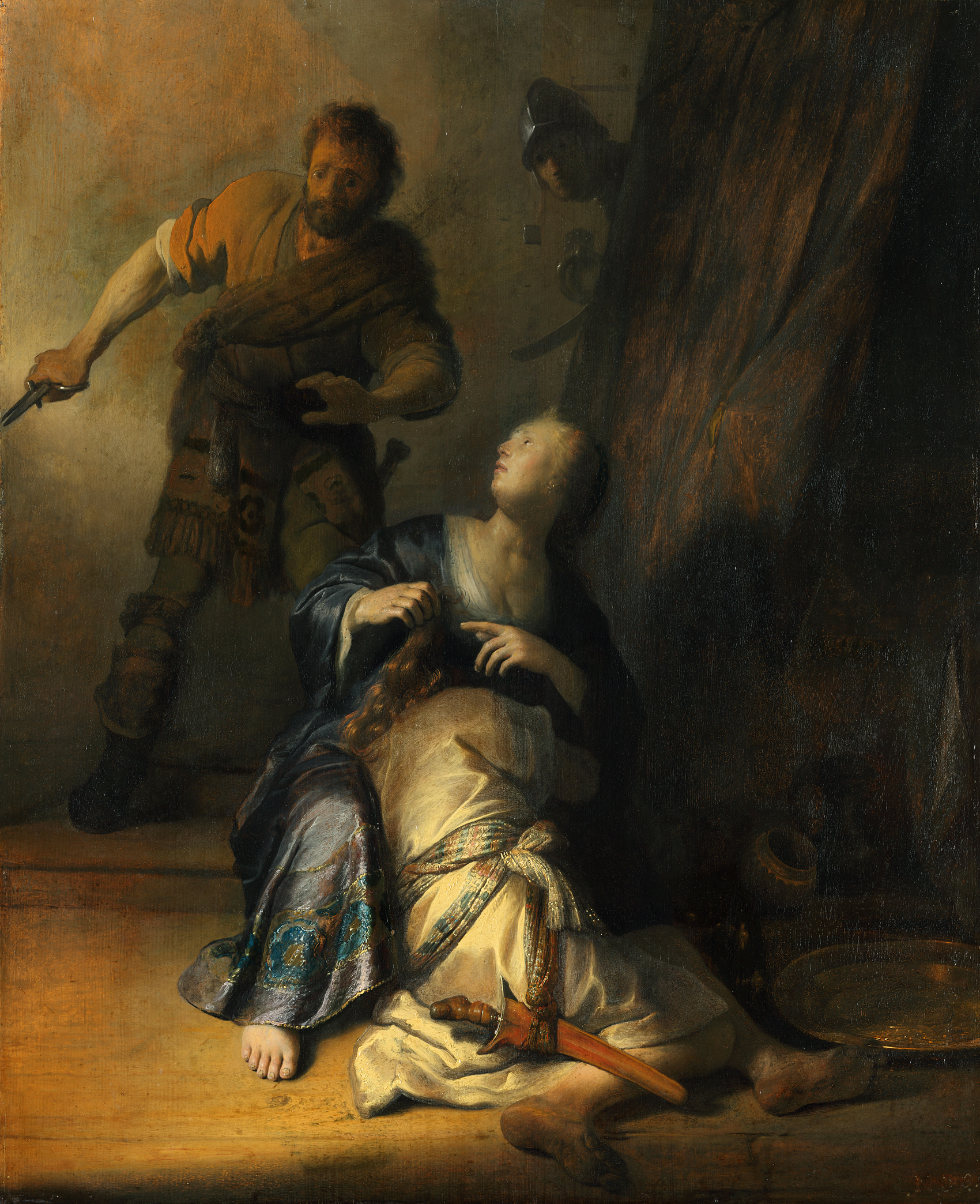 Rembrandt van Rijn · Samson and Delilah, c. 1628–1630 · Gemäldegalerie, Berlin · Public Domain. The artist’s imaginative rendering of the betrayal scene, not a documentary record.
What Judges 16:20 Actually Says
After Samson’s hair is cut and he attempts to fight his way free, the narrator inserts a devastating parenthesis: “He awoke from his sleep and thought, ‘I will go out as at other times and shake myself free.’ But he did not know that the LORD had left him.” (Judges 16:20, ESV)
The text does not say “the power left him because his hair was cut.” It says the LORD left him. This is consistent with the language used throughout the Samson narrative to explain his extraordinary strength. In Judges 13:25, “the Spirit of the LORD began to stir him.” In 14:6, “the Spirit of the LORD rushed upon him, and he tore the lion in pieces.” In 14:19 and 15:14, each of his great violent acts is preceded by the same phrase: the Spirit of the LORD came upon him. The source of power is consistently identified as divine presence, not a physical attribute.
The Nazirite Vow and Its Three Prohibitions
Before Samson’s birth, an angel appeared to his mother and announced: “The child shall be a Nazirite to God from the womb” (Judges 13:5, ESV). The category of Nazirite (נָזִיר, nāzîr) — one set apart by vow to God — is defined in Numbers 6:1–21, which specifies three prohibitions:
- No wine, strong drink, or grape products of any kind
- No contact with a corpse (including the body of a close relative)
- No cutting the hair
The three prohibitions together define a life of consecration. The hair is the outward, visible sign of the inward commitment to separation — not a magical reservoir of force, but a public declaration that this person belongs to God in a particular way. Barry G. Webb, in his NICOT commentary The Book of Judges (Eerdmans, 2012), is explicit on this point: the Nazirite vow is about total dedication to God, and the uncut hair symbolizes that the vow is in force.
Samson Had Already Violated Two of the Three Before Delilah
This is where the story becomes sharper and more uncomfortable. Samson violated two of his Nazirite prohibitions well before Delilah appeared.
Corpse contact (Judges 14:5–9): On the way to his wedding, Samson kills a lion with his bare hands. On the return journey, he detours to look at the carcass and finds that bees have built a honeycomb inside it. He scoops out honey and eats it — and gives some to his parents, “but he did not tell them that he had taken the honey from the carcass of the lion” (14:9). The Nazirite prohibition on corpse contact is not limited to human bodies; contact with any corpse renders a Nazirite unclean (Numbers 6:6–7 specifies human corpses, but the principle of separation from death is total). Whether the lion carcass technically falls within the legal definition has been debated, but the narrative’s point seems clear: Samson is already cutting corners on his consecration.
Wine (Judges 14:10): Samson “made a feast there, for so the young men used to do.” The Hebrew word is מִשְׁתֶּה (mišteh), literally “a drinking feast.” In the ancient Near East, this kind of seven-day celebration was inseparable from wine. The text does not explicitly state that Samson drank; it also does not go out of its way to exonerate him. Robert Chisholm, in his Kregel Exegetical Library commentary on Judges and Ruth, notes that the probability Samson consumed wine at a mišteh is high, and the author’s silence on the matter may itself be part of the characterization.
The upshot is that by the time Delilah cut Samson’s hair, two of his three Nazirite prohibitions had already been compromised. The hair was the last remaining outward token of a consecration whose interior substance had been eroding for years. “If you just keep the hair, the power stays” is a misreading both of the vow and of how divine empowerment works in the narrative.
The Shape of the Tragedy
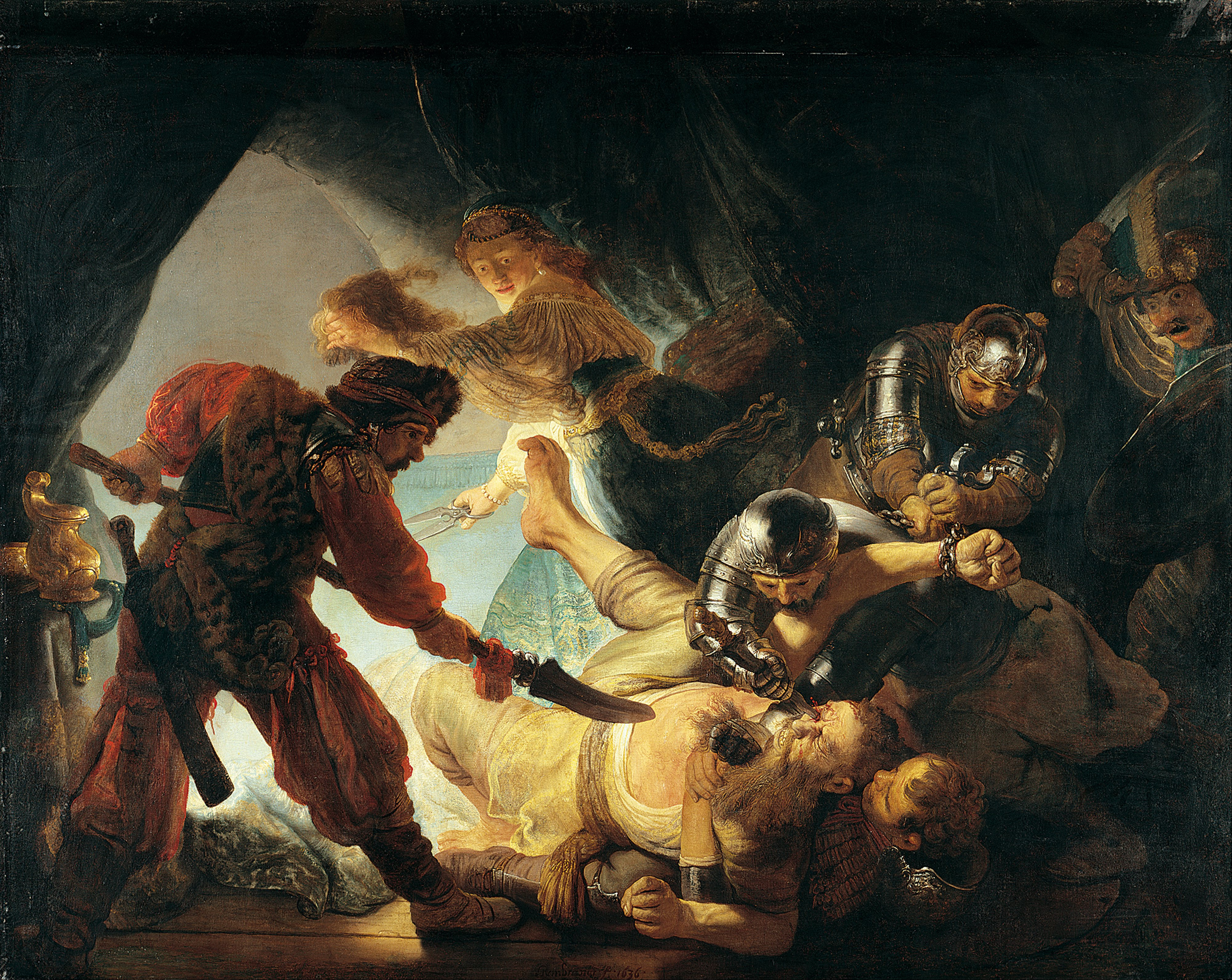 Rembrandt van Rijn · The Blinding of Samson, 1636 · Public Domain. Rembrandt’s dramatic rendering of the aftermath — Samson’s capture and blinding by the Philistines.
Daniel Block, in his New American Commentary on Judges and Ruth (Broadman & Holman, 1999), frames the Samson narrative as a sustained portrait of a man who possesses extraordinary divine gifting while repeatedly choosing to deploy it for personal satisfaction rather than covenantal purpose. He routs the Philistines when he is angry about his wedding (14:19). He burns their grain when he is insulted (15:4–5). He kills thirty men in a vendetta (14:19). The great acts that look like holy war are entangled with personal grievance.
The loss of the hair does not end a magical arrangement. It marks the moment when the last vestige of outward consecration is gone, and with it the Lord’s presence lifts — because Samson has been treating that presence as his personal asset rather than recognizing it as God’s gift, subject to God’s purposes. The question the narrative asks is not “where did the power come from?” — it answers that directly with “the Spirit of the LORD.” The question it leaves the reader with is: what does it mean to treat God’s gifts as personal property?
The hair matters in the story. But it matters as a sign, not as a source.
References
- Barry G. Webb, The Book of Judges (NICOT; Eerdmans, 2012)
- Robert B. Chisholm Jr., A Commentary on Judges and Ruth (Kregel Exegetical Library; Kregel Academic, 2013)
- Daniel I. Block, Judges, Ruth (New American Commentary; Broadman & Holman, 1999)
- Numbers 6:1–21 (Nazirite vow regulations, Masoretic Text)
- Judges 13:5, 14:5–9, 16:20, Masoretic Text (Nazirite violations and the source of Samson’s strength)
Comments
Leave a comment
Comments are reviewed before being published. Only your name and comment are stored — no personal data collected.
You might also like
Bible, Actually
Who Is My Neighbor? Leviticus and the Good Samaritan
Leviticus commands love for neighbors and resident aliens. Jesus’ Samaritan parable asks who acts as a neighbor across a hostile boundary.
Bible, Actually
Job's Monsters: Animals, Myth, and the Limits of Human Power
Job’s creatures invite both animal and mythic readings. Ugaritic parallels illuminate Leviathan without settling every detail.
Bible, Actually
Hammurabi and Biblical Law: What 'Eye for an Eye' Shows
The parallels are real; the route of transmission is debated. Read the clauses, social distinctions, and divine commissions carefully.
Loading comments…