Preacher Profile
The Text as Doorway: Hong Jung-gil's Topical-Narrative Preaching
A Label and Its Limits
Hong Jung-gil has described his own approach in plain terms: “I preach expository sermons, which is why I never experience preacher’s block. The meaning emerges naturally when I just look at the text.” Within Korean evangelical circles, that self-description has largely held. For decades Hong has been grouped alongside Ok Han-heum (Sarang Church), Ha Yong-jo (Onnuri Church), and Lee Dong-won (Jiguchon Church) as one of the “evangelical four” — a quartet of pastors who defined the sound and sensibility of Korean Protestant preaching in the final quarter of the twentieth century. The expository label traveled with him.
But the sermons tell a more interesting story.
From Philosophy Student to Presbyterian Pastor
Hong was born in 1942 in South Jeolla Province. He was twenty-three, a philosophy student at Soongsil University in Seoul, when he came to faith in 1965. The change in direction was swift: he joined Campus Crusade for Christ Korea, began serious theological study, and graduated from Chongshin University (Chongshin Theological Seminary). He received ordination in 1972. During his seminary years, the Reformed scholar Park Yun-sun — arguably the most influential figure in Korean conservative Presbyterianism in the twentieth century — became a formative influence. That encounter grounded Hong’s theology in a covenant-centered, Calvinist framework that would shape his preaching for life.
His pastoral career began at Guri Jungang Church in 1973. Three years later, in 1976, he planted Namseoul Church (남서울교회). In 1995 he established Namseoul Grace Church (남서울은혜교회) as a branch congregation, an experiment in what he called church-without-building — community organized around people rather than property. Over a full ministry, Hong planted twenty-three churches and led two significant parachurch organizations: the Global Missionary Fellowship (GMF, 한국해외선교회) and KOSTA (Korean Students and Scholars Abroad), an annual conference that became a touchstone for Korean diaspora students.
Three Axes for Reading Hong’s Preaching
Structure: The architecture is topical, though the packaging can resemble exposition. Hong opens with a biblical text, identifies a central keyword or image, and develops the sermon outward from that pivot — not inward, through verse-by-verse analysis. The text functions as authorization for a theme rather than as the subject of investigation. The genre label Hong applies to himself is expository; the actual movement of his sermons is better described as topical.
Primary Material: Three sources supply the sermon’s main body. First: episodes from Korean modern history — liberation from Japanese colonial rule, the Korean War, economic development, democratization — read through a theological lens as evidence of God’s providential work. Second: named individuals from Hong’s forty-plus years of pastoral life, whose stories carry the sermon’s weight at decisive moments. Third: figures from Korean evangelical and public life, woven in as illustration or supporting witness. These three layers intersect in a way that gives his preaching a particular density — the sense of a preacher speaking from accumulated experience rather than from a commentary.
Tone: The rhetorical register is encouragement rather than urgency. Where certain Korean preaching traditions emphasize the call to decision — often emotionally heightened, dramatized, insistent — Hong’s sermons tend to move toward solidarity with the listener. The congregation is not primarily being pressed toward a verdict; it is being accompanied on a road the preacher is walking too.
This combination — topical framing, narrative body, accompanying tone — is more accurately labeled a topical-narrative hybrid than classical expository preaching. That observation carries no evaluative weight. It is simply an accurate account of what happens in the pulpit, which turns out to differ meaningfully from the genre label Hong assigns himself.
The Theological Foundation
Below the narrative surface, Hong’s preaching rests on a distinctly Reformed theological structure. His training under Park Yun-sun left a permanent mark: the categories of covenant, sovereign grace, and divine initiative organize his theological world, and they shape the claims his sermons make even when they are not named explicitly. What does not appear regularly is the technical apparatus of language study — Greek and Hebrew word analysis, syntactical argument, close engagement with historical-cultural background. The exegetical work stays below the waterline. What surfaces in the pulpit is the fruit of that labor, translated into accessible narrative.
This translation choice reflects a deliberate pastoral instinct. Hong has spoken at length about the pastor’s responsibility to speak to people’s actual lives rather than to display technical knowledge. The Reformed convictions function as a deep grammar — structuring the theological claims the sermon stakes without requiring the audience to work through technical vocabulary.
Pastoral Self-Critique and What It Reveals
Few things illuminate a preacher’s self-understanding as clearly as public self-criticism. Hong has been unusually candid in this regard. Around 2013, he told Korean evangelical audiences that he considered his pastoral career, taken as a whole, a failure. He named what had gone wrong: he had pursued models drawn from American megachurch culture — large sanctuaries, attendance figures, ministry programs — measuring success by metrics that had little to do with genuine pastoral formation. He said, in a phrase that circulated widely: “I was a fake pastor.” He also identified the discipleship-training model he had practiced for years as structurally contradictory.
These retrospective judgments throw the encouragement-oriented register of his preaching into sharper relief. The warmth at the end of a Hong sermon is not sentimentality. It carries the weight of someone who has spent decades reckoning with the distance between institutional success and the kind of pastoral presence that actually changes people. The invitation his sermons extend is offered by a preacher who has stopped performing certainty about what worked.
The Church Inside History
A sustained attention to social responsibility runs through Hong’s ministry and directly shapes the stories that enter his sermons. He founded Milal School (밀알학교), an educational institution for children with autism and intellectual disabilities, and developed Goodwill Store (굿윌스토어) as a social enterprise providing vocational training and employment. He worked with the North-South Sharing Movement (남북나눔운동) during North Korea’s famine years. These activities are not incidental to his preaching; they generate the lived material that his sermons depend on.
When Korean history appears in his pulpit — and it appears often — it appears as the arena in which the church is called to locate itself with conscience and clarity. The question his sermons put to hearers is less “have you made a decision?” and more “do you see what God is doing in this history, and will you be part of it?” That is a different summons than the call to individual conversion that structures much evangelical preaching, and it helps explain why the tone is companionship rather than confrontation.
A Preacher Worth Reading Carefully
Hong Jung-gil’s preaching rewarded careful attention precisely because it does not do what it claims to do — and what it actually does is more interesting than the label. A preacher who identifies as expository but operates as a topical-narrative preacher is not being inconsistent; he is revealing something about how Reformed conviction and pastoral instinct interact in practice. The text is genuinely authoritative for him; it just exercises that authority by generating themes and momentum rather than by submitting to verse-by-verse dissection.
For pastors preparing topically oriented series, the Didymus Lab report offers a useful counterweight: a way to check whether the theme selected is genuinely present in the chosen text, not just associated with it. Hong’s sermons often assume the connection; the commentary and keyword sections of the report make the connection explicit.
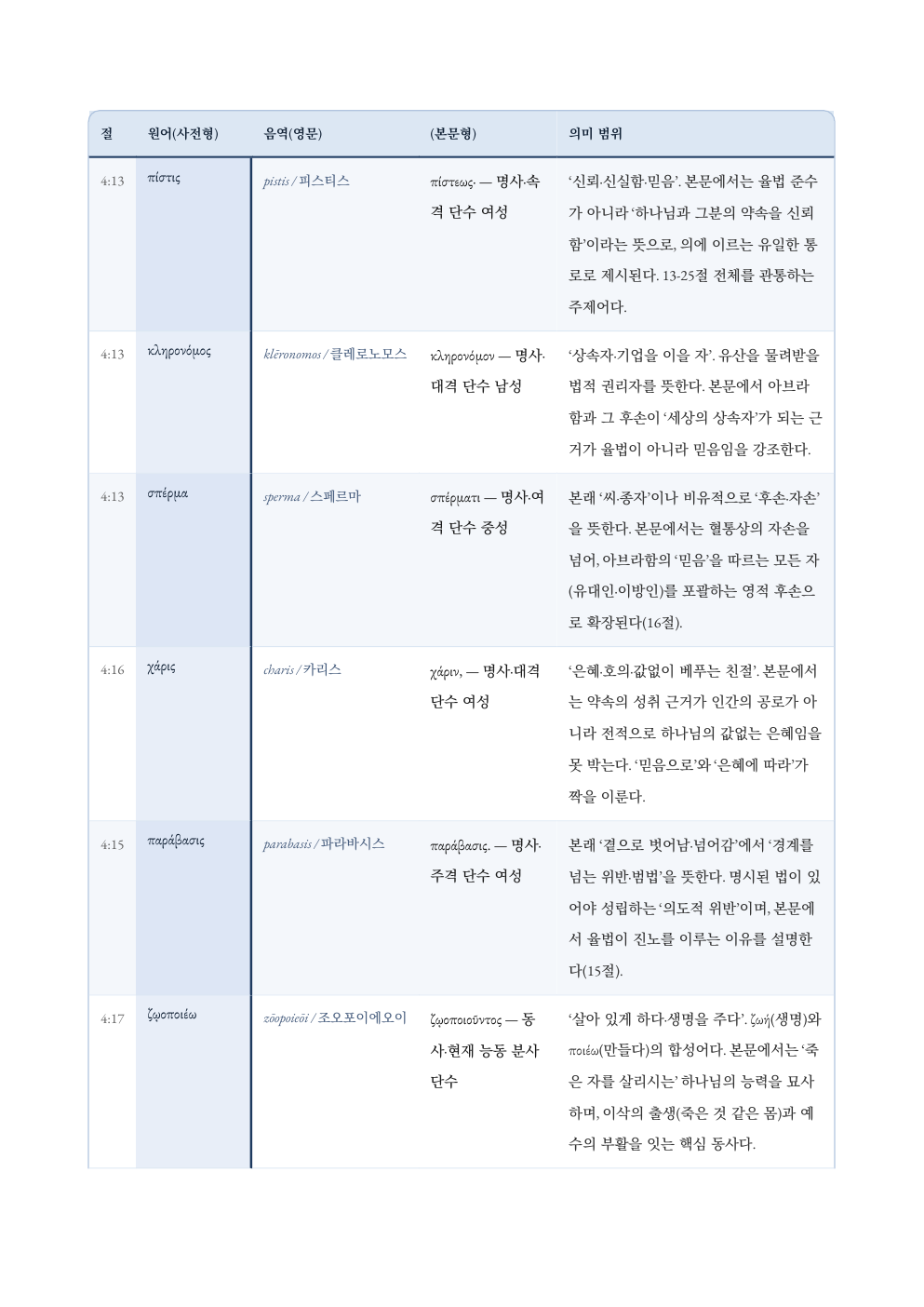
For preachers who share Hong’s habit of digging deep into a single historical episode as sermon material, a follow-up research report that tracks one thread beyond the passage itself is worth a look. The follow-up research sample on patronage in Romans shows what it looks like to take one historical thread and pursue it a layer deeper than the passage commentary alone would go.
Sources
- Hong Jung-gil, Wikipedia (Korean): https://ko.wikipedia.org/wiki/%ED%99%8D%EC%A0%95%EA%B8%B8
- Newsnjoy, “민족·역사 품지 못한 홍정길 목사의 설교” [Sermon analysis]: https://www.newsnjoy.or.kr/news/articleView.html?idxno=224942
- Newsnjoy, “홍정길 목사 설교에 대한 강경민 목사의 변론” [Response piece]: https://www.newsnjoy.or.kr/news/articleView.html?idxno=224996
- Newsnjoy, “홍정길 목사 ‘나의 목회는 실패’” [Self-critique interview]: http://www.newsnjoy.or.kr/news/articleView.html?idxno=195142
- Christianity Daily (Korean), “홍정길 목사 ‘나는 가짜 목사였다’”: https://kr.christianitydaily.com/articles/95754/20180401
- iGoodNews, “홍정길 목사 은퇴…복음주의 4인방 물러나”: https://www.igoodnews.net/news/articleView.html?idxno=33799
- Kyobo Books author page: https://store.kyobobook.co.kr/person/detail/1000367001
Comments
Leave a comment
Comments are reviewed before being published. Only your name and comment are stored — no personal data collected.
You might also like
preacher-style
Preaching through a Poet's Eye: So Kang-seok and the Biblical Character Narrative
How So Kang-seok, founding pastor of Saeeden Church, weaves together poetic sensibility, psychological character study, and high congregational energy into a distinctive narrative homiletic.
preacher-style
Preaching History as Gospel: The Preaching Style of Han Hong
Pastor Han Hong of Saeroun Church blends historical scholarship with biographical narrative to craft sermons that move between past and present with unusual depth.
preacher-style
Where Literature Meets Scripture: The Contemplative Preaching of Kim Ki-seok
An exploration of Rev. Kim Ki-seok's poetic, meditative approach to preaching at Cheongpa Methodist Church, where humanistic insight and prophetic sensitivity converge.
Loading comments…